

Why Airport Choice Matters as Much as the Aircraft You Fly
At Farnborough Airport (EGLF), a Gulfstream G650ER can be airborne within 25 minutes of the passenger arriving at the gate; at a poorly managed shared apron, the same aircraft waits while ground handlers treat every private arrival as a low priority. The aircraft is identical. The experience is not.
When charter clients ask which aircraft to book, they are asking only half the question. The other half is where that aircraft will be handled, fuelled, and cleared. A Dassault Falcon 8X positioned at the wrong FBO can lose an hour to paperwork and apron delays that a well-chosen secondary airport would never impose.
Private aviation in Europe operates through a patchwork of dedicated terminals, shared FBOs, and general aviation zones appended to major commercial airports. Understanding which airports consistently deliver depends on knowing how to read the gap between a handling fee and actual service quality. Some FBOs charge premium rates and deliver nothing beyond the basics; others charge less and execute at a higher level than the headline brand suggests.
This guide covers the five dimensions that separate the best airports for private jets in Europe from the rest: FBO quality, customs clearance speed, slot availability, ground transport links, and the ability to perform under peak-season pressure.
The Tier-One Hubs: Geneva, Farnborough, Nice, Zurich, and Biggin Hill
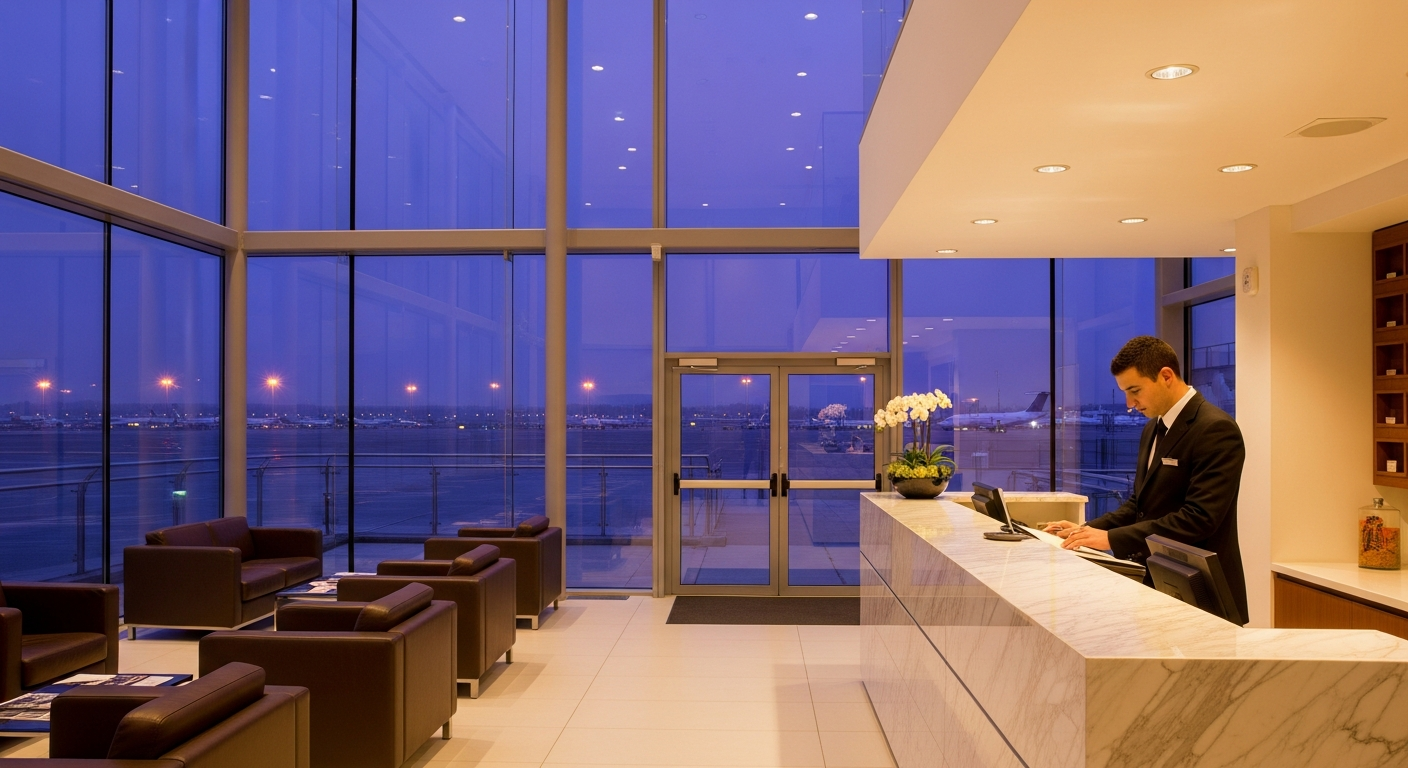
Geneva Airport (LSGG) is the most strategically important private aviation hub in continental Europe. The Geneva Business Aviation Centre sits apart from the main terminal, offering dedicated customs, a private lounge, and ramp-to-clearance times that regularly come in under 20 minutes on arriving flights. For ski season charters into Verbier and Zermatt, LSGG remains the entry point of choice, with helicopter connections to most major resorts bookable directly through the FBO.
Farnborough (EGLF) is the benchmark for a purpose-built private airport. There are no commercial operations, no shared taxiways with widebody airliners, and no competition for apron slots with scheduled traffic. The two terminal buildings handle departing passengers within minutes of arrival, and the airport's position 35 miles southwest of central London makes it genuinely competitive on ramp-to-door time. A one-way charter on a Cessna Citation Longitude from EGLF to LSGG typically runs to £18,000–£22,000 at current market rates, covering four to six passengers in a stand-up cabin with 6 ft 0 in of headroom.
Nice Côte d'Azur (LFMN) operates a dedicated business aviation terminal that handles the extraordinary volumes the Cannes Film Festival, Monaco Grand Prix, and Monaco Yacht Show generate annually. At peak times during these events, slots must be secured six to eight weeks in advance. Outside those windows, LFMN offers direct ramp access, fast customs clearance for non-Schengen arrivals, and helicopter transfers to Monaco in under eight minutes.
Zurich Airport (LSZH) carries a stronger commercial footprint than LSGG or EGLF, which creates occasional apron congestion, but the private terminal operated by Jet Aviation sets a standard for interior quality that few FBOs in Europe match. Zurich's central position in European airspace means sector times are competitive from almost any UK or northern European departure point, and the direct rail link to the city centre resolves the last-mile problem that undermines several larger airports. LSZH connections to Davos during the World Economic Forum make it indispensable for January travel.
Biggin Hill Airport (EGKB) serves south London's charter traffic with a clean, well-resourced FBO and no commercial aviation competing for slots. Handling times are fast, the airspace is less congested than Luton or Stansted, and the airport's position means IFR clearances are issued without the delays that affect busier points in the London TMA. For passengers travelling from Kent, Surrey, or East Sussex, Biggin Hill removes an entire motorway leg from the journey.
Europe's Best-Kept Secrets: Secondary Airports That Outperform the Main Terminals
The most consistent recommendation among experienced charter clients, when evaluating the best airports for private jets in Europe, is to question the default. The headline hub is rarely the optimal choice for every passenger on every sector, and the better option is often 30 kilometres away with a fraction of the congestion.
Antwerp Airport (EBAW) offers something Brussels Zaventem (EBBR) cannot: a genuinely private experience with customs on site, fast turnarounds, and a position 45 kilometres from central Brussels that competes on door-to-door time when motorway conditions are considered. Handlers at EBAW process arriving aircraft with a focus that reflects low volume and high professional attention. For capital city meetings in Brussels, it frequently beats the alternative on every metric that matters.
Le Bourget (LFPB) is the standard Paris private aviation entry point and deserves its reputation. The airport sits 11 kilometres northeast of the city centre and hosts some of the finest FBO infrastructure in Europe, including a purpose-built terminal with dedicated immigration lanes. Orly (LFPO) and Charles de Gaulle (LFPG) are technically accessible for general aviation traffic but impose commercial airport constraints that Le Bourget entirely avoids.
Palma de Mallorca (LEPA) works reliably for Balearic Islands traffic, but Ibiza Airport (LEIB) is the more interesting case. During peak summer charter season, the handling quality at LEIB's private aviation section consistently outperforms expectations given its volume. The slot situation is challenging in July and August, but it can be managed effectively with six to ten weeks' advance planning.
Salzburg Airport (LOWS) is the correct Austrian choice for ski travel, not Vienna (LOWW). LOWS sits four kilometres from the city centre, and passengers can be on the slopes above Zell am See within 90 minutes of landing. For a Bombardier Challenger 350 positioning from London Luton, the sector time to LOWS is approximately one hour and 40 minutes.
Biarritz Pays Basque Airport (LFBZ) is perhaps the least-mentioned high-quality option for south-west France and northern Spain travel. It handles private aviation with genuine efficiency, and its proximity to San Sebastián, 45 minutes by road, makes it a credible alternative to Bilbao for Basque Country arrivals. The FBO operation is small but consistently well-regarded by regular operators on the sector.
Slot Restrictions, Curfews, and Peak-Season Availability Across Europe
Farnborough (EGLF) operates under a night movement quota that restricts departures between 23:30 and 06:00 local time. This rarely affects charter clients during normal operating hours but becomes relevant for late-evening positioning flights during major events. Biggin Hill (EGKB) carries a similar nocturnal restriction and should be factored into schedule planning for evening departures.
Geneva (LSGG) experiences its most acute slot pressure during the World Economic Forum in January and the Geneva Motor Show in March, and again in late December through early January for ski season peak. Securing slots for those windows requires confirmation eight to twelve weeks out, and the airport authority will not accommodate late requests during high-demand periods.
Nice (LFMN) during Monaco Grand Prix week is one of the most constrained slot environments in European private aviation. Parking is rationed, apron space is allocated partly by prior-year relationship, and the combination of Formula One traffic, yacht show movements, and general Côte d'Azur summer demand compresses availability severely. Charters booked for that period with fewer than six weeks' lead time are typically routed via Cannes Mandelieu (LFMD) or Toulon-Hyères (LFTH) instead.
London Heathrow (EGLL) nominally accepts private aviation but operates under one of the most restrictive slot regimes in European airspace. The grandfather slot rules that govern EGLL mean general aviation traffic is practically absent unless a client has a specific operational reason, and the co-ordination overhead makes Heathrow a poor default for charter itineraries. London Luton (EGGW) and Stansted (EGSS) handle overflow from Farnborough and Biggin Hill but carry commercial terminal dynamics that dedicated private facilities avoid.
Amsterdam Schiphol (EHAM) presents a similar challenge. The airport's slot co-ordination is among the tightest in Europe, driven by KLM hubbing obligations and runway capacity constraints. For Netherlands arrivals, Rotterdam The Hague Airport (EHRD) frequently offers faster handling, less slot friction, and a more attentive private aviation operation than its larger neighbour.
Ground Transport and Ramp-to-Door Time: The Final Test of a Great Airport
The final metric that separates the best airports for private jets in Europe is one no slot confirmation or FBO rating fully captures: how long it takes from landing to wherever the passenger actually needs to be.
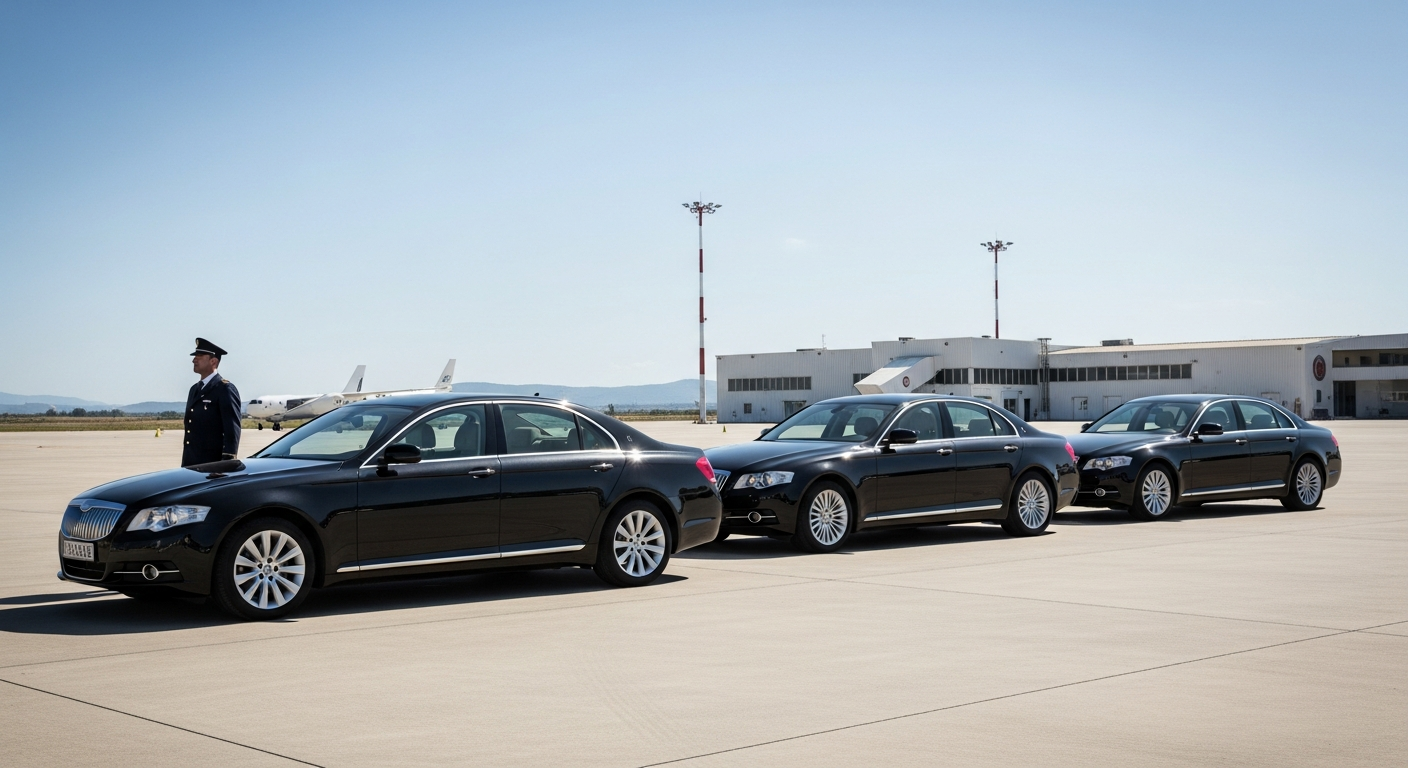
At Farnborough, a vehicle positioned on the ramp can depart while the aircraft is still taxiing. With light motorway traffic, central London is reachable in 45 to 55 minutes via the M3 and A316. In sustained congestion, the same journey extends to 90 minutes, at which point helicopter transfer to a central London helipad becomes a serious consideration for passengers with fixed arrival commitments.
Geneva's ground transport network for private aviation is among the most co-ordinated in Europe. The FBO provides direct transfer arrangements to resort helipads, city centre hotels, and the railway connection to Lausanne and Bern, all bookable through the handling agent. Central Geneva is 12 minutes from the aviation centre by road under normal conditions.
Le Bourget (LFPB) connects to Paris via the A1, typically 25 to 40 minutes to the 8th arrondissement depending on traffic and time of day. The Stade de France interchange makes this sector unpredictable during major events at that venue, and experienced charter brokers flag that variable to clients at the point of booking rather than at departure.
Biggin Hill (EGKB) serves south London exceptionally well but is the wrong choice for clients heading to the City or north London, where Luton or Stansted, despite their commercial character, reduce transfer distance materially. The correct airport is always the one that minimises total trip time, and that calculation changes with every destination postcode.
Across Europe, the best airports for private jets consistently deliver on all five metrics: FBO quality, customs speed, slot access, ground transport, and the ability to absorb peak-period demand without degrading the passenger experience. Choosing correctly requires the same rigour as selecting the right aircraft for the sector.


